Thursday, 20 April 2017

Riding on the LSETF Platform to pay it forward.

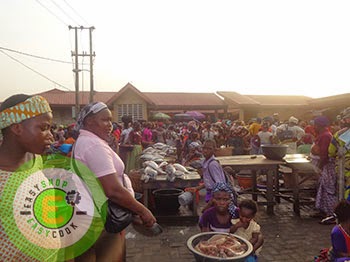
When I started www.easyshopeasycook.com 12 years ago, Otto and Oyingbo Markets were the two main markets I frequented for fresh fruits, vegetables and other staples. The women and men in these markets taught me so much about buying and selling fresh produce. They gave me credit for as long as they could accommodate and generally guided me when I needed them. A number of them have been in business for over 25 years.

The bulk of my suppliers now come from the farms and Mile 12 market but almost daily there is something to buy in either of these markets as they have some specialized items unique to them.
I have been looking for a way to give back to them for all they have done and continue to do for my business. I had planned food safety, hygiene and basic business training for them but I was advised that if access to finance is not included in the training the traders will not take me seriously so this program was stalled as I did not have money to give them.

Then Lagos state started the Micro Enterprise loan scheme of between N50,000 to N500,000.00 which did not need collateral. I met with the various leaders of the market associations to discuss it with them and find out their interest. We invited the LSETF (Lagos State Employment Trust Fund) and LIRS (Lagos Internal Revenue Service) representatives to sensitize the associations last week on all that is required to qualify and access the loan. It was a successful meeting. 50 forms were given to the traders; 20 for women and 30 for the men.

Today, I went back to help the women fill their forms and found out about 70 traders (male & female) are interested in the loan so we had to make extra copies of the original form. Each of them want an average of N200,000.00 as working capital and the interest rate is 5% per annum. All those we are starting with are only credible long term members of the associations. I went through their sales book and the average turnover for each of them is about N1.5m employing about 3 people each. Over half of them do not have bank accounts, they save their money with cooperatives/associations, ranging from N2000 - N7000 daily.

I went with 2 of my staff to help the women fill their forms today and I was able to convince them of the business training program. Since I came with money first, they all were excited about a business training program to help them better organize their business. As they are of various tribes, I have to get trainers that will be able to communicate in about 3 Nigerian languages for it to be effective. They have all done so well for themselves but can do with better tools and guidance.

Nigeria has the largest group of female entrepreneurs in the world but most of our women are small/micro business owners, we need to give them the right business training and access to finance to help them grow to medium and large scale.  When I talked to some of these women I learnt so much about their businesses and responsibilities and I can only imagine what more they can do for themselves, family and society if only they had more help tailored to their needs.

I am so happy to have finally found a way to give back to these women and men. So much can be done on this platform. People won't care how much you know until they know how much you care. Once we are able to help them get these loans for their businesses, they will listen to us when we talk about implementing food safety standards, hygiene and basic business training. Then we see where else this takes us.


Wednesday, 15 February 2017

THE FIRST NIGERIA FOOD SAFETY & INVESTMENT FORUM

Finally we are making progress.

Forgive me for staying away for so long, a lot was happening behind the scenes but now i'm back fully to keep you updated on the food safety and food security activities of my darling Nigeria.


The first Nigeria Food Safety and Investment forum took place on the 7th and 8th of February, 2017 at the Eko Hotel & Suites, Victoria Island, Lagos. The forum was designed to enhance food safety and foster international business cooperation and partnerships.

Yours truly could not make the event as I was at a convention out of state but I got the communique so I'll share the objectives, outcomes and recommendations with you here. What I'll also be doing is following up on these recommendations and how they are eventually implemented.

I was hoping for wider recommendations that cuts across the Agricultural value chain but this is a start; I particularly like the recommendations of communicating technical useful data from their activities to the larger audience through innovative and effective media including traditional town criers, TV drama episodes and not limited to internet medium. This is huge for me as it has been very difficult for me getting data specifically on Nigeria relating to food safety, food loss/waste etc. Let's see how far we get with this.

The Nigerian government also set up food task force to help proffer solutions to the ever increasing food prices, I will share my views on this in my next post.

Go through the information below and let me know what you think about it.
Cheers.


Objectives: The objectives of the Nigeria Food Safety & Investment Forum were:

1. To focus on the promotion of inclusive and sustainable industrialisation by identifying, attracting and mobilising investments and appropriate technologies especially for small and medium size enterprises in Nigeria.
2. To address the global governance of food safety in regulatory systems and showcase models and best practices from all over the world.
3. To link the lessons learnt from extant national assessments with international best practices in the selected value chains.
4. To enlighten the operators in the food sector on the implementation of the normative references to achieve recognition for quality management systems and assessment of competence.

OUTCOMES &RECOMMENDATIONS

1. The forum was briefed by Honourable Minister for Agriculture on the status of food production in Nigeria and also on the renewed focus of the Ministry in terms of capacity building for safe food production. This has led to successful reassignments of the supervision of the three Federal Universities of Agriculture in Nigeria to the FMARD to drive the training process of personnel for safe food production. He also informed on the proposed setting up of Colleges of Food Health and Nutrition Sciences in these Universities.
2. The forum was concerned about reported cases of increase in non-communicable diseases in Nigeria arising from contaminants. It therefore, advised on the usage of food grade stainless steel materials in the fabrication of daily used food processing equipment such as grinding machines.
3. The efforts of the Federal Ministry of Health towards improving the National Food Safety Management system was commended especially the ongoing implementation of the National Policy on Food Safety and its Implementation Strategy; the forum recommended adequate funding, involvement and participation of private sector and NGOs in this regards.
4. There must be an efficient and effective system of information transfer between public and private sectors. Collaboration, cooperation and communication between Government Ministries, Regulatory Agencies, Support Net, Industry, Consumers, Producers, and Research Institutes need not be over-emphasised.
5. Borrowing from Brazilian experience: a. Consumers must be empowered by appropriate legislation such that burden of proof could be placed on the company rather than the consumers. b. Periodic surveillance of levels of contamination and incidences of food borne diseases is strategic to management of public health and should be legislated at all tiers of government. c. Operators in the food industry should begin to look less towards banking industry for funding as there are other means of intelligent funding such as crowd funding, venture capitalists, etc.
6. The Forum noted the creation of Food Safety & Applied Nutrition Directorate in NAFDAC, which is dedicated towards ensuring safe foods along food value chain. Accreditation of NAFDAC and SON Food Laboratories was commended and the need for more laboratories within the value chain should be looked into.
7. Since Government MDAs generate a lot of technical useful data from their activities, the forum advised that this information should be communicated to the larger audience through innovative and effective media including traditional town criers, TV drama episodes and not limited to internet medium.
8. Borrowing from European Union (EU) experience: a. There should be National Reference Laboratories located in areas of major production, for analytes and contaminants in food and agricultural products. b. The implementation of SPS legislation must be harmonised amongst the regulatory bodies. c. Competent Authorities in Nigeria must be effective and their reports reliable through documented official control system and programmes.
9. In view of economic losses resulting from non-compliance to existing food control systems by exporters, the forum recommended better collaboration between public and private sectors; and increased self regulation through trade/umbrella association
10. Taking into consideration complexities involved in food processing, the forum strongly advised regulatory policy of having accredited food scientists in every food processing company especially high risk food.
11. In view of incessant reportage implicating pesticides, the forum encouraged promotion of integrated pest management application in pest control.
12. The Forum advocated formation of individuals, micro, small and medium food enterprises into a cluster of 100-150 groups to work together in order to reduce cost of establishment, to attract attention and supports from government, development agencies.
13. In order to promote and encourage safe and quality products, reward systems in form of Food Awards should be instituted for honouring companies that have done well yearly.
14. The forum strongly advocates for provision of funds and infrastructure for surveillance, enforcement and laboratory investigation since laboratory support is critical
15. The forum recommends the establishment of more accredited private laboratories across the country to complement the existing government laboratories.

The outcomes of this forum is recommended to NFSMC for consideration and implementation.


Saturday, 2 April 2016

Lagos State Food Marshal Corps and the Oko oba Abattoir facelift

Last week the Nigerian Minister of Agric, Mr. Audu Ogbeh announced plans for a food safety policy for Nigeria. On this blog that type of announcement gets us excited. It made me very happy because if we follow through we will be able to compete favourably in the international market. We will also be able to reduce our food waste and food bill.

A scene from Tomatoes section of Mile 12 Market, Lagos
Although this National food safety policy is not yet out, the Lagos State Government came out with food safety plans of its own. The Special adviser on Food Security Lagos State, Mr. Ganiyu Okanlawon announced earlier in the week on zero tolerance against distribution of unwholesome foods and all forms of food poisoning in the State. He said it is necessary to monitor the whole process of food handling and distribution until it gets to the final consumers, adding that the office of Food Security is already proposing setting up Food Marshals Corp that will be positioned in various markets across the state for proper monitoring.

Food Marshal Corp might be a good idea on paper, they will probably be like the sanitary inspectors we presently have. Not to sound pessimistic but this I see as a punitive way to start. Left to me we have to start with a massive food safety campaign. We need people to own this initiative for
Makoko Fish Market - Cleaning Section
themselves and see why this is necessary for our health and environment. The campaign should connect the dots between the rampant diseases, food waste, environmental degradation and price of food.

We all complain about the high cost of food stuff in the market but most do not know that if the food waste is reduced in the value chain then the cost will also go down. The unhygienic practice in the market of food coloring, artificially ripening of fruits with unlicensed chemicals, formalin injected chicken/ turkey has also not been linked to any known ailment people can relate to. People need to connect the dots and see for themselves.

We will eventually need the Food Marshal Corp but not until we have gone a year or two massively educating the citizens so they do not think it is another tax collecting scheme the government is plotting. When the people are well informed and understand the need for food safety in our society, policing them will be more effective.

One major area that requires reorientation is the abattoir. I did an article in 2014 about the gory state of Kara abattoir in Ogun State, Oko Oba Agege, Lagos; which is much bigger than Kara is also just as bad. I also saw a documentary on the abattoir in Edo State in 2015 and it shows that abattoirs in other states of Nigeria are also very bad. I still can't believe Nigerians eat meat from these places.

Interestingly I read online this week that the Lagos State Government announced the possibility of a collaboration with MEATCO the premier livestock processing facility in Southern Africa. The Namibian company will support Lagos State with the technology and know-how of livestock processing to combat the challenges currently faced in this area. The management of MEATCO also agreed to visit Lagos State to assess the abattoir facilities at Oko Oba, Agege and partner with the government in building 2 brand new abattoirs.


With all these plans for Lagos state agriculture value chain I see a huge opportunity for wealth creation, job creation and development of the agric sector. A lot still needs to be done but we are seemingly on the right path. I will be watching and most definitely keeping you informed.

Wednesday, 23 March 2016

Aftermath of National Economic Council Retreat - Silver lining for the Agriculture Sector in Nigeria

After years of advocating for the full development of Nigeria Agric Value Chain and also the implementation of an international food safety standard in the value chain, I was relieved yesterday when I read the highlights of the just concluded National Economic Council Retreat.
President M. Buhari


The 2-days NEC retreat which was concluded on Tuesday 22 March, 2016 ended with a number of agreements in 7 Thematic areas including Agriculture. These are meant to be the guidelines as to where government is looking to invest, develop and areas where private investors should also be focusing on.

Below are the highlights of what was agreed for the agriculture sector. In the coming days we will break them down and discuss what this means for Nigeria and how anyone interested in exploiting the Agriculture value chain can benefit.

Like I always say there is more to agriculture than farming and there seem to be government will to develop this industry now.

Highlights of Agriculture plans from the NEC Retreat
  1. The Federal Government to re-position Bank of Agriculture to enhance its capacity to finance agriculture.
  2. Funding for Agricultural sector is considered critical and sources of intervention funding from the Central Bank of Nigeria should be considered
  3. A single digit interest rate for agricultural loans should be considered while duties and taxes for Agricultural products and equipment should be waived
  4. Develop strategic partnerships between Federal and State government. Each State should make specific commitments to crops in which it has comparative advantage and request Federal Government intervention
  5. National targets for self-sufficiency should be set for identified crops, which should be monitored. Tomato paste – 2016, Rice – 2018, Wheat – 2019
  6. The Federal and State Governments should roll out agricultural extension services nationwide
  7. The Commodity Exchanges should be established for price regulation and avoidance of losses due to lack of markets. The Abuja Commodity Exchange should be revitalised
  8. The National Agricultural Land Development Authority (NALDA) should be re-established
  9. Federal Government should develop an Agriculture Implementation plan whereby State Governments are encouraged to identify at least two crops in which they have comparative advantage
  10. States should open up of rural/feeder roads to facilitate transportation of agricultural produce to be supported by the Federal Government
  11. The Federal and State Governments should establish minimum price guarantee for farm produce
  12. The Federal Government should provide immediate funding to upscale efforts of Agricultural Institutes of Research and Development across Nigeria
  13. State Governments should also be encouraged to fund research and development in agriculture through technical colleges, universities and research institutions
Mr. Audu Ogbeh - Hon. Min. of Agric
The Minister of Agric, Mr. Audu Ogbeh also gave me something to cheer about yesterday. During an interview with Channels TV news on Tuesday March 22, 2016 he talked briefly about government plans in banning the importation of tomato paste and other products which he said had been certified unfit for consumption by the United Nations and National Agency for Food and Drug Administration and Control.

He also said that while Nigeria is aiming for food sufficiency amidst importation challenges, a major concern is the large scale self-poisoning by Nigerians. This has to do we what is used to preserve food and how food is packaged for sale amongst other poisonous practices. The Minister was with members of the Food and Agriculture Organisation who were in Nigeria to help implement a food safety policy that would strengthen food control system through an institutional reform when he gave this interview.

For me, this is the icing on the cake. There is no talk of food sufficiency without solving the health and safety problems we have in the value chain. This also feeds into the export plans for Nigeria, without fully implemented food safety initiatives we cannot export anything.

I will be following up on this personally.

Tuesday, 10 March 2015

MAKOKO FISH MARKET - Sharks, Stingray and all the lovely sea creatures


Makoko Fish market - ASEJERE SMOKING FISH MARKET (Asejere means Trade with profit) is located at Yaba; it is a popular market off Herbert Macaulay Street, Yaba. It is a busy and I think one of the longest streets in Lagos; which leads to the 3rd Mainland Bridge.

Makoko Market Entrance
At the office in www.easyshopeasycook.com , we come here between 2 - 4 times a week. The fish market opens every day but you get the best prices early in the morning on Tuesdays and Wednesdays that is why our Fresh Fish days at the office are on these two days. Monday is rather dry, Thursday - Saturday are for caterers that come to buy fish for weddings and parties. Knowing that fish is a well sort after dish at high profile parties the fishmongers increase their prices on these days because the caterers have no choice but to buy.
Fresh Asa or Osan Fish for weddings


Makoko Market Entrance
Makoko market is not by any standard a high profile fish market; the food safety standard here is …. In fact there is no food safety standard here except the regular cleaning of tables and sweeping of the floors. There is no rhythm and no rhyme, there is no particular structure in place but I get the feeling that somehow everyone knows their stall when the sun rises. Getting the traders here to wear aprons, gloves and caps will be a huge task but this is not my mission here today. I will look away from all the dirt and enjoy the beautiful creatures God put in the sea for us to eat, use as ornaments or just viewing pleasure.
Mothers and little kids all involved
The Market is dominated by Agoyin people from Cotonou. They are mostly fisher men's wives and children and they live around Makoko. Some within walking distance of the market while others use the canoe to and from their homes daily.

I sometimes buy fresh fish from Oyingbo market nearby and see some of my fishmonger friends there as well. Most trade at Makoko early in the morning and by noon go off to Oyingbo market to finish off leftovers from the morning sales.

Baby shark, Large Baracuda Fish, Crocker, Sole Fish
This Tuesday morning at Makoko, the fish was very pricey. This is because for some reason the fisher men could not catch a lot of fish. The fishermen at Epe who sometimes supply this market as well were also not successful so the little catch of the day were sold at cut throat prices. One of the women said to me  ' everything has gone up, even the dollar'; I don’t know how the exchange rate affects the fish caught in Lagos waters by local fishermen but their wives are using that as an excuse to increase their prices in the market…. Nigeria!, we allow all sorts. But then again they are from Cotonou; which means whatever profit they make, a portion will be sent to their relatives at home and this is where I think the exchange rate comes to play. This is my layman explanation for sanity sake and it makes sense. hehehe

Lady fish - beautiful but looks bony. I prefer flesh
Lobster once for prisoners now for Kings, imagine that.
I always enjoy coming here; I would bring my two girls here during the next holiday as they are old enough to enjoy the sights and sounds. Like me, shopping is in their blood but I have to get ready for millions of questions especially from the younger one. You will find all sorts of fishes here; I spotted a baby shark today and lots of fishes that I often see on the National Geographic Channel like the famous Stingray that killed the popular Crocodile Hunter Steve Irwin. I can’t imagine eating that fish; probably because a similar one killed Steve Irwin and the thought turns me off completely and also because my palate is not so rich so trying new things can be very difficult.
Calamari... it tastes like prawns. I like this.

I spotted Calamari, Tiger Prawns, Shrimps, Crocker Fish, Red and Black Snapper, Baracuda, Catfish, Sea Crab, Sea Snails, Tilapia and so many that I have no idea what the English names are. When I ask the fishmongers they give me the Cotonou names and they sound so complicated I don't bother to retain it in my memory… hehehe.

Not all the women here sell fish, some wait in line to help clean the fish at the back of one of the bungalows in the compound near the smoking kiln. The smoking kiln is operated by the women; in fact I do not remember seeing any male in this market except the little boys and the men at the gate collecting parking fees.

Stingray - Steve Irwin made this popular.
The smoking area is where the deep freezers are also housed. The fishes are brought in fresh everyday and by end of the day they store the dead fishes in the freezer or smoke it in the kiln.

Smoking Kiln, the women are also in charge.
There are so many children and babies in this market. School is definitely not in the agenda. They are waiting to take over from their mothers or better still start their own business doing this same thing. There are some fishmongers here that I have known since they were just kids 10 years ago and now they own their own fish, prawn or crab basket. I enjoy patronizing those kids whenever I see them as I watched them grow. Some are married with little kids as well and the cycle continues. They are sometimes more aggressive than their parents and they drive a hard bargain too but all in all it is beautiful knowing their story.
Back room cleaning women

So this is my journey today, I will visit the Epe fish market soon and fill you in on the sights and sounds. I am from Epe, the fish market is just down the road from my family house but it is not somewhere I go frequently as it too far from my office; which will make the fish too expensive to sell to my customers.

 Hope you enjoyed the pictures.

Cheers,
@lagosshopping | @EasyshopLtd

Sea Crab, beautiful and delicious if someone takes out the meat for me
Cleaning the table for today's sales
Waiting for customers. Cotonou Fishmongers

Wednesday, 3 December 2014

#AgriBiz4Dummies - Vol. 1 GOING BACK TO THE ROOTS


 Technology required to fabricate efficient farm tools

Crude oil is the new enemy of the planet. Whether it is through its use or by its trade every country is looking for a way to do without it.Technology and Agriculture are the two industries that can profitably fill the economic gap that will be created if oil dependent countries diversify.  

Agriculture is about food cultivation and everything that is directly or indirectly related to it. Agribusiness is the commercialization of agriculture especially using technology.

My interest in Agribusiness emanates from my business of retailing fresh farm produce on my company's website www.easyshopeasycook.com . Our need for traceability, freshness, quality and cost reduction lead us to backward integration; which is a business model whereby a company takes direct control of how its products are supplied. In our own case we need to have direct control or influence in the farms that supply our company in order to trace the produce, eliminate adulteration, enforce food safety policies, improve profit margins and make our company more competitive.
We need more local research Institutes to improve our seeds
The more I got involved in the process the more I realized I knew very little about it. I got involved with some farm produce associations and I found out we all know so little hence the dearth our country is in. So this series is for me to learn about the business of agriculture, share with others and learn from the feedback I receive from everyone.

I have called it #AgriBiz4Dummies because I plan to be as simple as possible to remove the complication hindering people from getting involved to help build the industry. 

The business of Agrochemicals
Agribusiness includes agrochemicals, breeding, crop production, distribution, farm machinery, processing, seed supply, marketing, retail sales as well as the education and technology behind all these. My interest is not really in the academic but the practical things being done around the world in this sector. I will highlight what Nigeria and Africa are doing and what more we must do to meet up and possibly dominate this sector globally.

Greenhouse technology and materials
China has been equated to Manufacturing; I strongly believe Agribusiness is ours to take. Africa should be the food basket of the world because the land, the climate and the people are available here, all we need now is the technology and will to back it up. 

I hope to hear from you here or tweet me @lagosshopping, it becomes more interesting that way.

Cheers.


Tuesday, 18 November 2014

So called sorted fresh tomatoes and other ugly market practices.

There is an urgent need to enforce basic food safety initiatives in our market place. We cannot continue to be cheated by market agents and middle men. They are so powerful that it is difficult to influence their method of operation in Mile 12 market especially.

Fresh produce come in from various parts of the Nigeria in rafia baskets. This means by the time they get to the market half are rotten and broken because of the mode of transport. Sometimes you find that some farm workers slept on the produce all through the ride from the farm. There are no standard baskets or standard weights. The produce are claimed to be both sorted and unsorted, to me there is hardly a difference in the two categories.Whichever you decide to buy you will still have to sort out yourself before use.

If you buy the sorted tomatoes I guarantee you about 30% will be either broken or rotten. Imagine what you will find in the unsorted basket. This is very very frustrating for me as a retailer. It is difficult to plan, you are not sure of the quality you can get any day and also the weight is not fixed as baskets can be changed at will. You are not even sure of source of the produce as there is no form of traceability tag available. We shop blind daily. The worst thing is the awful smell you get in the market. Fresh produce are supposed to smell fresh but not our own.... very nauseating I tell you.

That is why at Easyshop we have decided to partner with the farmers directly. This way we are sure of the origin of the produce, the method of farming, the size of the basket and most importantly the quality to be supplied to our office. It also helps us to control our prices.

'Sorted' Tomatoes directly from the market
Middle contents of the 'Sorted' basket of tomatoes


Bottom of the basket of 'sorted' tomatoes

Some broken tomatoes in the 'sorted' basket of tomatoes
At Mile 12, price is determined by various forces even the mood of the men in charge. The association can decide to fix a price based on demand or political situation at the moment and this will destabilize our operations in the office. Sometimes the agents will decide not to sell the fresh produce on the truck because the old stock is still on ground even if the old stock is obviously rotten. Then you have a case of the traders stuffing the rotten lot at the base of the basket and then the fresh ones on top. All sort of ugly practice that cannot be explained.

If the market is accessible and car park is sufficient I doubt they will have a problem of selling fresh produce in record time. But the market agents themselves have blocked the car parks with stalls and frustrated the very customers they crave.Someone needs to tell them a market place does not need to be dirty or cramped to be vibrant. Must we accommodate all manners of traders? If you cannot adhere to the rules of the market place why should we drop our standards? Whose job is it to make sure the fresh produce brought in are fresh and not rotten farm produce that are forced into our hands?

Is this the job of LGA's or State govt or even Federal? We are throwing away a lot of money and food in the midst of starving people. We are also allowing ugly market practices that are harming our health and economy.

Government is spending a lot of money to help farmers and increase farm produce; there is more to farming than just growing crops and fertilizer. Without proper food safety practice enforced in the supply chain the impact will not be felt by the final consumer. What use is farming, if you cannot sell your produce.